 SkyFlux
The night sky,
on your horizon
Aurora radar that knows the Kp your latitude actually needs, a meteor-shower calendar, eclipses, and a 3D solar system you can fly through. The app has no ads, no account and nothing tracking you.
Astronomy news
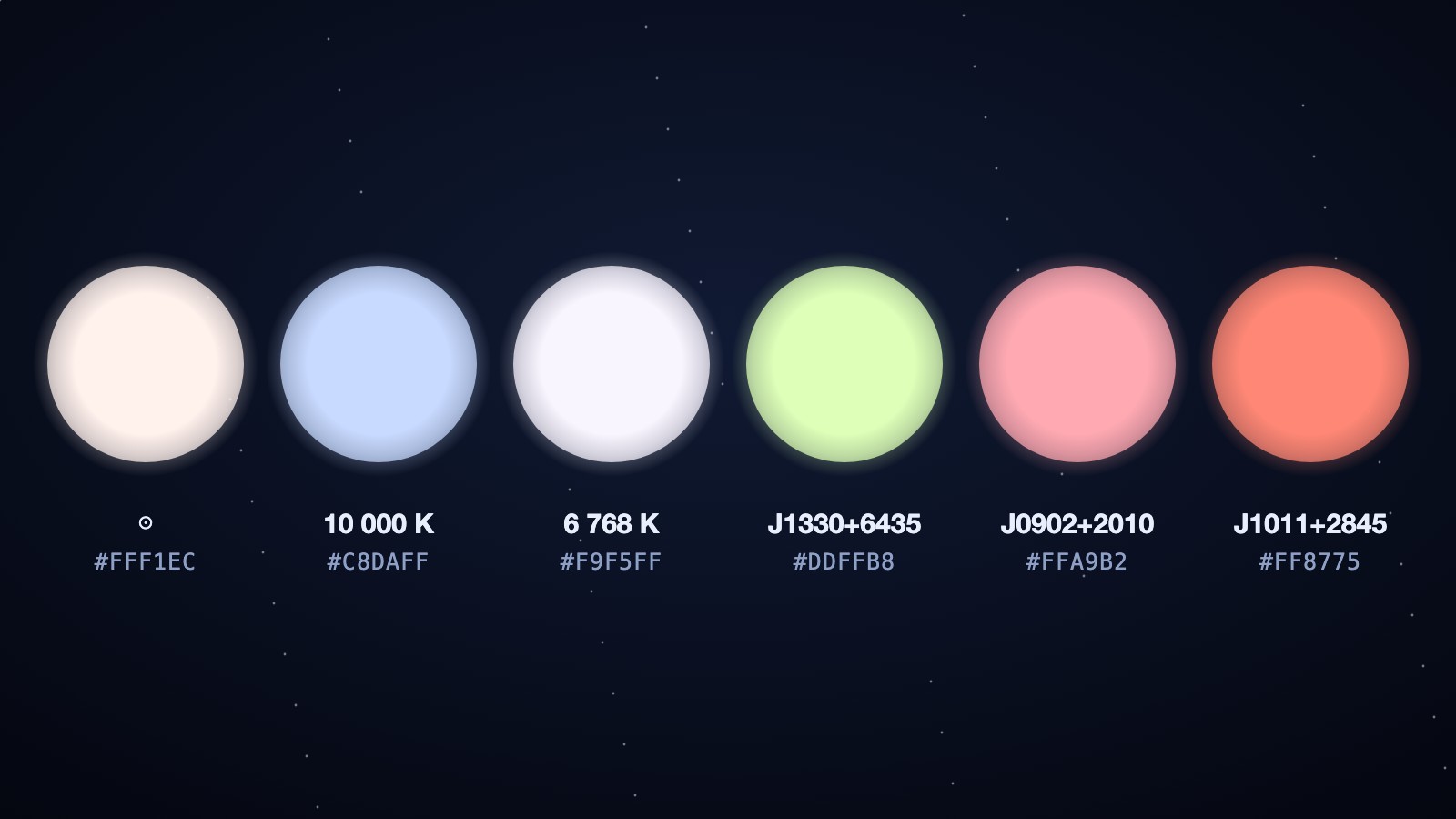
Some White Dwarfs Would Look Green, Pink or Purple Up Close, a New Study Finds
White dwarfs are the dense remnants of Sun-like stars, and we usually picture them as white or pale blue. A study led by Mark Hollands at the University of Warwick, published in RAS Techniques and Instruments on 15 October 2026, computes the colour that an observer close enough to resolve a white dwarf's disc would see. Most are indeed white: among the 152 white dwarfs nearest the Sun, only about one in thirty departs clearly from the colour of a glowing body, and those few look pink or yellow. Among rarer, hand-picked stars the team also found one that would look distinctly green.
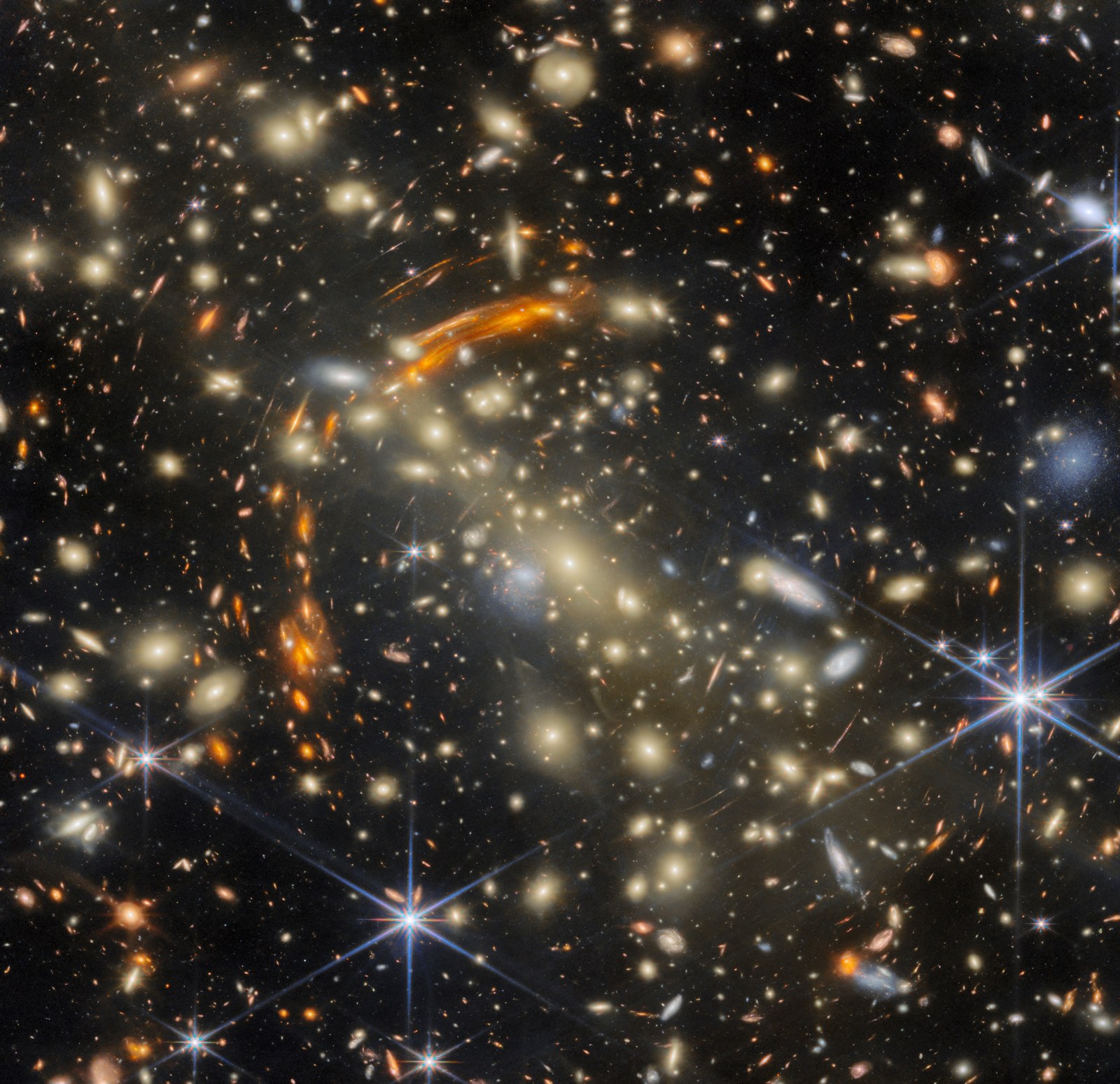
MACS J0454.1-0300: Webb Image of the Golden Galaxy Cluster and Its Lensed Arcs
Webb's Picture of the Month for September 2026 shows MACS J0454.1-0300, a galaxy cluster in Orion. Its gravity bends and magnifies the light of far more distant galaxies behind it, and small bright knots in them appear magnified over 300 times in some cases.
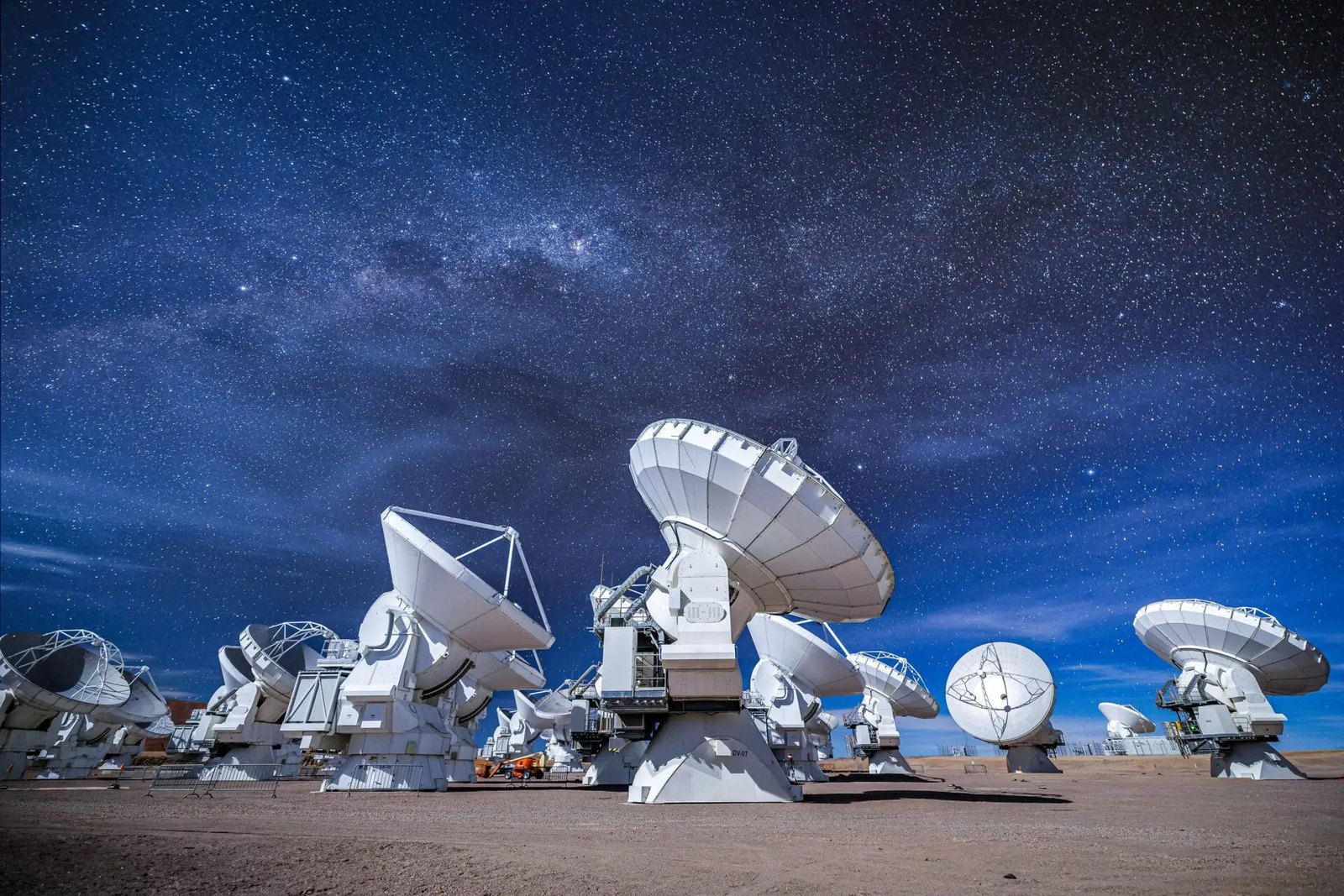
ALMA Cycle 13: Record Demand and the New Band 2 Receivers
The ALMA observatory in Chile began its thirteenth observing cycle on 1 October 2026, with record demand: astronomers asked for almost nine times as much time on its main 12-metre array as was on offer. The cycle also opened a new set of receivers, called Band 2, to general observers for the first time.
SkyFlux in 30 seconds
Inside the app
SkyFlux tells you when and where to look for the planets, names the constellations overhead and forecasts the aurora for the nights ahead. Turn on alerts and it will let you know when the aurora is on its way, even with the app closed. Here is what that looks like on a phone and on a tablet.
On a phone
On a tablet
Your horizon, not a percentage
Most aurora apps show the chance overhead — 0% while the sky glows green to the north. SkyFlux tells you the Kp your own latitude needs for the aurora to reach your horizon.
Meteor showers & eclipses
Every major shower with its radiant live on the sky map, and eclipse timings for where you stand — computed on the device, months ahead, offline.
Sky reminders and aurora alerts
Switch on a reminder for the evening a meteor shower peaks, an eclipse is due, or the Moon is full. These are scheduled on your device, worked out from the sky over your own location — no account, no server, and they arrive even when the app is closed. Aurora alerts work differently: the aurora cannot be predicted months ahead, so our server watches the live forecast. Aurora alerts stay off until you switch them on; then the app sends the server a random ID, a push token, your rounded location and your alert settings. Switch them off and that record is deleted.
Point it at the sky
An AR sky view corrected with the World Magnetic Model, so the compass points where the stars actually are. Red night mode keeps your eyes dark-adapted. A couple of degrees always remain — a phone compass is not a theodolite, and the app says so rather than pretending.
Quiet by design
No ads, no account, no tracking in the app. Your location leaves the phone only after rounding to a tenth of a degree (about 11 km) — for the cloud forecast, a place name and, if you switch them on, aurora alerts. The weather and place-name services receive it through our server, so they never see your IP address. The one exception is a Google map you open yourself: it starts at your exact position.
Privacy is the feature. The app has no account, no advertising ID, no ad networks, no analytics and no tracking, and the sky you see is calculated on your own device. The only outside services built in are Google’s map, which runs only while you have it open and collects its own data while it does; the app store’s purchase system; and, only if you switch on aurora alerts, Google’s or Apple’s push service. Crash reports stay off unless you switch them on. What the app fetches from the network, and why, is written out plainly in the privacy policy. This website is different: it uses Google Analytics and the Meta pixel, but only if you allow them (Cookie settings, at the bottom of every page).
English · Eesti · Suomi · Deutsch · Svenska · Norsk · Dansk · Français · Español · Italiano · Русский · Nederlands · Polski · Português · 日本語 · 繁體中文 · हिन्दी
Get it on your phone
Scan the code, or open skyflux.app/download on your phone. It takes you to SkyFlux on Google Play: no account, no ads, and Google Play keeps it up to date.
